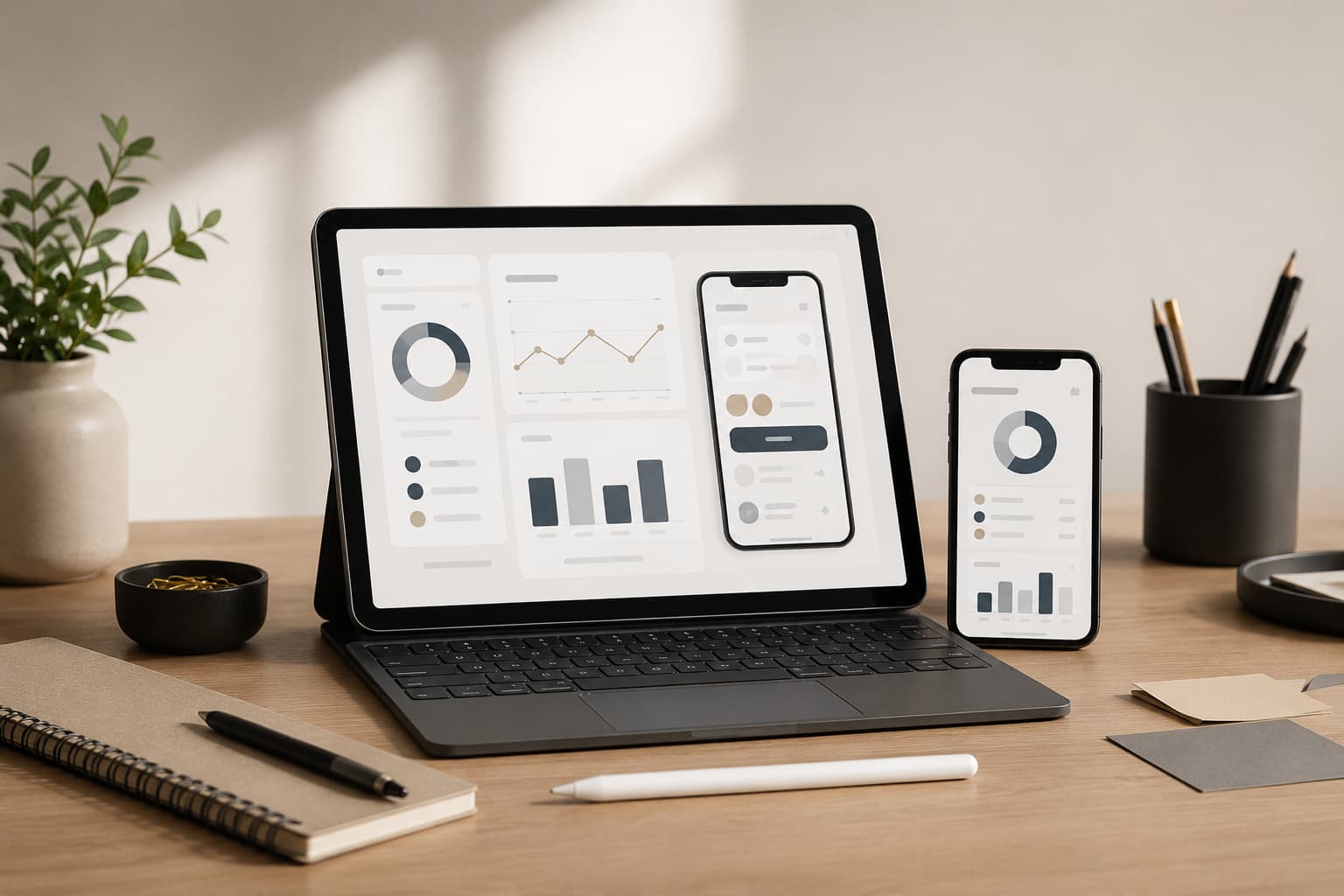
Custom money management app planning gives you the chance to build a budgeting tool around your real life instead of forcing your habits into someone else’s system. Standard finance apps can be helpful, but they often come with features you do not need and limitations you cannot change. A custom app can focus on your income rhythm, bills, savings goals, debt priorities, spending categories, and review habits. It can also remove clutter that makes money management feel overwhelming. The goal is not to build the most advanced tool possible. The goal is to build a clear, useful app that makes everyday financial decisions easier.
A Custom Money Management App helps because financial routines are personal. One person may need strict category limits. Another may need irregular income planning. Someone else may need a stronger savings tracker or debt dashboard. A flexible custom budgeting tool can prioritize the features that matter most. Build Your Budget Boss: A Beginner’s Guide to Creating Your Own Budget App (Without Losing Yours) | How to Make a Budget App PDF Guide for Beginners, Digital Download helps beginners understand how to turn personal money needs into a realistic app concept.
Custom Money Management App features should solve specific problems. If overspending is the issue, build category alerts and weekly summaries. If savings feel inconsistent, create automatic goal progress screens. If bills are easy to forget, add recurring payment reminders. If income changes monthly, include flexible forecasting. A thoughtful finance app feature list helps you avoid building features just because they sound impressive. Every feature should have a job. If it does not help users make better money decisions, simplify it or leave it out.
Start with a small feature set and expand later. Income, expenses, savings goals, upcoming bills, and monthly review notes are enough for a strong first version. Once those pieces work well, the app can grow. A focused app is easier to build, easier to test, and easier to use. Complexity should come only after clarity.
A custom money management app should answer the questions users ask most often. How much can I spend this week? Did I save enough this month? Which category went over budget? What bills are due soon? How close am I to my goal? A practical money management dashboard should make those answers visible quickly. The dashboard should not be crowded with every possible metric. It should show the numbers that guide action. When the app answers real questions, users return to it naturally.
Custom Money Management App planning can feel intimidating for beginners, but the process becomes easier when you break it into steps. First, define the user and money problem. Second, list the essential screens. Third, map the main actions. Fourth, decide what information appears on the dashboard. Fifth, test the flow with real examples. A beginner-friendly no-code budget app approach can help people create a prototype without advanced coding skills. Build Your Budget Boss: A Beginner’s Guide to Creating Your Own Budget App (Without Losing Yours) | How to Make a Budget App PDF Guide for Beginners, Digital Download supports this beginner path with a more organized framework.
Ease of use is not a small detail. It decides whether the app becomes part of someone’s routine. Use clear names for buttons and categories. Keep forms short. Let users add common expenses quickly. Show progress visually. Avoid making every task require several screens. A strong simple finance app design respects the fact that money tracking often happens during busy moments. The easier the app feels, the more likely users are to keep using it. Good design reduces friction before motivation fades.
Custom Money Management App testing should use realistic scenarios. Add a paycheck. Enter rent. Add groceries, a subscription, a restaurant purchase, and a savings transfer. Then check whether the dashboard makes sense. Can you see what changed? Can you understand the remaining budget? Can you spot a problem quickly? A practical budget app prototype should be tested before it becomes too polished. Testing early prevents wasted effort. It also reveals which features are actually helpful and which only looked good in theory.
A custom app does not need to be perfect on the first version. It needs to be useful enough to improve. Track what users ignore, where they get confused, and which screens they return to often. Then refine the structure. This turns the app into a stronger personal money system. For foundational building steps, read the budget app builder article. For tracking-focused structure, explore the personal finance tracker article. Build Your Budget Boss: A Beginner’s Guide to Creating Your Own Budget App (Without Losing Yours) | How to Make a Budget App PDF Guide for Beginners, Digital Download helps beginners turn a custom money idea into a practical tool that can grow with their financial life.




Leave a comment
You must be logged in to post a comment.