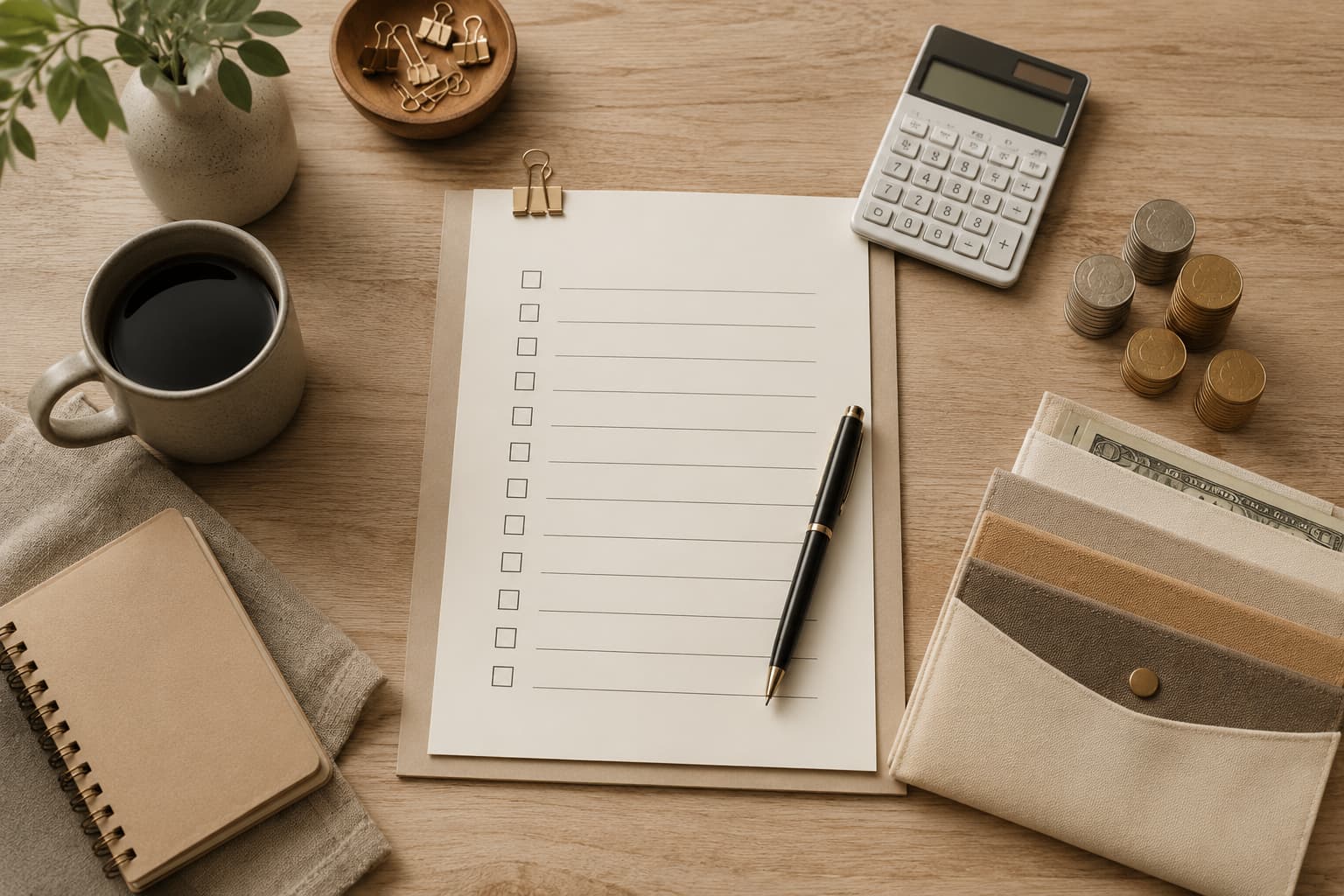
Money saving checklist planning helps you take action when a savings goal feels too big. Saving $3,000 in 60 days can sound overwhelming if you only look at the final number. A checklist breaks the goal into smaller steps: review income, cut waste, pause nonessentials, track weekly progress, and move money before it gets spent. This turns a large goal into a repeatable routine. You do not need perfect money habits to start. You need clear actions that are easy to follow consistently. A checklist keeps the challenge visible, practical, and easier to continue when life gets busy.
A Money Saving Checklist helps because it removes decision fatigue. Instead of wondering what to do next, you follow a clear sequence. A useful printable savings checklist can guide your setup, weekly tracking, spending review, and final progress check. This matters because savings challenges often fail when people rely on memory. The $3K in 60 Days Challenge Checklist | How to Save $3,000 in 2 Months | Printable Budget & Savings Plan gives the process a simple structure you can return to each week.
Money Saving Checklist steps should begin with the exact target. Write the total amount, the deadline, and the weekly savings requirement. If you want to save $3,000 in 60 days, divide it into smaller milestones. A strong savings milestone tracker helps you see whether you are on pace. The target should be visible, not hidden in your mind. Put it in your planner, budget sheet, app, or printed checklist. When the goal stays visible, spending decisions become easier to compare against it.
This step also helps you decide whether the goal needs support from extra income. If the weekly amount is too high for expense cuts alone, add one income action to the checklist. That might be selling unused items, taking a small project, picking up extra hours, or redirecting refunds. The target tells you how strong the plan needs to be.
Before saving aggressively, review your last 30 days of spending. Look for subscriptions, delivery fees, impulse purchases, unused services, convenience spending, and categories that drift upward. A clear expense reduction checklist helps you choose cuts that matter. Do not waste energy on tiny changes if larger leaks are obvious. Cancel what you do not use. Reduce what you can live without temporarily. Keep what supports health, work, and necessary stability. The checklist should create focus, not guilt.
Money Saving Checklist success depends on moving money consistently. Decide when savings transfers will happen and how much each transfer should be. Many people do better when savings move right after payday. A practical weekly savings transfer step keeps the goal active. If income arrives irregularly, transfer a percentage instead of a fixed amount. The $3K in 60 Days Challenge Checklist | How to Save $3,000 in 2 Months | Printable Budget & Savings Plan helps make transfers part of the challenge rhythm instead of a last-minute decision.
No-spend and low-spend rules can create fast progress when they are realistic. Choose categories that can be paused for 60 days, such as takeout, impulse shopping, extra decor, unused subscriptions, or casual browsing purchases. A smart no-spend challenge plan should still allow essentials and planned needs. Extreme rules can backfire if they make daily life too stressful. Choose rules that protect the goal while still feeling possible. The best checklist gives you a path you can actually finish.
Money Saving Checklist tracking should be simple and visual. Mark each transfer, each completed no-spend day, each reduced bill, and each extra income action. A savings progress tracker gives you proof that the effort is working. This matters during the middle of the challenge, when motivation can dip. Progress markers keep the goal from feeling invisible. They also help you identify what is working best. Maybe grocery planning saves more than expected. Maybe subscription cuts help less than you thought. Tracking turns the challenge into useful feedback.
At the end of the 60 days, review more than the final number. Ask what habits helped, what felt difficult, which cuts were sustainable, and which expenses returned immediately. This turns the challenge into a learning tool. For stronger planning, read the Monthly Budget Planner article. For savings tactics, explore the Smart Savings Strategy article. For a complete money structure, continue with the Personal Finance Plan article. The $3K in 60 Days Challenge Checklist | How to Save $3,000 in 2 Months | Printable Budget & Savings Plan helps you save with focus during the challenge and carry better habits into the next goal.




Leave a comment
You must be logged in to post a comment.